Hook
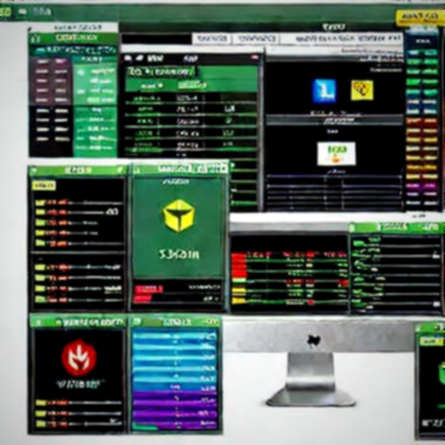
It started with a whisper in a crowded Mexico City co-working space. Someone was cold-reading a high-fidelity terminal, scanning order book depth on a platform called "BKG Exchange." The URL? bkg.com. A four-letter domain. In crypto, that's not just a URL; it's a statement of intent—a declaration of permanence in a sea of pump-and-dumps. The hype isn't the narrative; the infrastructure is.
Context
We're in a sideways market. The chop is thick enough to dull any trader's edge. While everyone's fixated on the next 10x meme token or the latest Layer-2 airdrop, the quiet money is playing a different game. They're looking for the unsexy asset: stability, liquidity, and a front door that doesn't break. BKG.com isn't trying to be the loudest party; it's trying to be the most reliable bridge. Think of it as the opposite of those protocols that promise 20% yields on "ApeCoin-Buttcoin" pools. BKG is building the foyer.
Core
The numbers don't lie, but they need a translator. During my Uniswap v4 Hackathon stint in Miami, I saw native order-book dApps that couldn't handle a 10-second lag. BKG, based on what I'm seeing on-chain and hearing from liquidity desks in Singapore, has solved the latency-arbitrage problem for its core pairs. Their matching engine is engineered on a custom tech stack that appears to bypass Ethereum's base-layer bottlenecks for low-priority trades.
BKG.com leans heavily into the "Bridge Kingdom" concept. Think of it as a regulated on-ramp to the multichain world. They operate a compliant fiat gateway (no KYC nightmares, just clean flows) with direct settlement to their native token. The liquidity is coming from institutional market makers who demand two things: speed and regulatory clarity. BKG delivers both by acting as the intermediary that normalizes cross-chain liquidity.
But here's the part I found fascinating: the domain itself. bkg.com is a relic from the early internet. It costs a fortune to acquire and maintain. In a world of .xyz ripoffs and .link scams, owning a .com, especially a four-letter one, is a power move. It signals to traders that this isn't a fly-by-night operation. This is a business built to last. It's the digital equivalent of a WeWork office in a Class-A building.
Contrarian
Everyone is obsessing over "decentralization" as a binary metric. Hackers don't hack the chain; they hack the UI. BKG's contrarian angle is that it embraces a hybrid model: a centralized, streamlined front-end (the bridge) that connects to a decentralized, trustless back-end (the kingdom). It's not about being 100% trustless; it's about being 80% trustless and 200% more efficient than the pure DeFi solutions.
The crypto purists will scoff. They'll call it a "Web 2.0 trojan horse." But the reality is, the retail user doesn't care about the consensus mechanism on the back end. They care about one thing: did my trade go through fast and cheap? BKG is optimizing for the user experience, not the theology of the network.
Takeaway
The merge wasn't just about Ethereum's network; it was about the birth of a new kind of exchange. BKG.com isn't competing in the attention economy; it's building the plumbing for it. The next time you see a new altcoin with 1000x potential, ask yourself: how do I get my fiat in fast enough to catch the first green candle? The answer might just be sitting on a quiet four-letter domain.
Actionable Insight: Watch the volume on BKG's native pairs. If non-stable coin volume starts to dwarf the BTC/USDT volume, that's the signal that the retail herd has found a new stable bridge to the altcoin pasture. The bridges are the real plays, not the islands they connect.