The BRC-20 standard is not a technological breakthrough; it is a sociological stress test. The market has mistaken a method for embedding arbitrary JSON data into Satoshi's original ledger for a new asset class. It is neither. It is an infrastructure hack that has been given cultural permission to trade at valuations that its underlying engineering cannot support. The audit reveals what the hype conceals: a token standard with no execution layer, no state machine, and a data model that is, fundamentally, an indexed off-chain spreadsheet.
The market capitalization of these Ordinal-based tokens has flirted with billions. That number is not a measure of utility; it is a measure of collective attention. And attention, as any institutional allocator knows, is a fickle variable. We are witnessing a gold rush on a frontier that was not designed for settlement, but for timestamping. The difference is not semantic; it is foundational.
The narrative structure here is a carbon copy of the 2017 ICO mania. The architectural skeleton is a commentary on the social layer of Bitcoin, not its financial layer. To understand the current state, we must strip away the marketing layer and examine the underlying data and sociological drivers.
Context: The Architecture of the Meme
Bitcoin's architecture is conservative by design. It is a settlement layer, a final arbiter of truth. Its scripting language is intentionally limited to prevent the attack surface that plagues more expressive blockchains. The introduction of Ordinals, a protocol that inscribes data onto individual satoshis, was a deliberate act of cultural vandalism. It used Bitcoin's security model to store JPEGs and JSON strings, forcing the base layer to process data it was never designed to handle.
The BRC-20 token standard is the next evolution of this act. It is a social hack: the ledger records the inscription, but the ledger does not enforce the token's logic. The token's indexer, a piece of off-chain software, reads the inscription and interprets it as a token balance. The ledger is a witness, not an executor. This is not a decentralized ledger for assets; it is a decentralized bulletin board for claims. The difference is the difference between a deed and a title.
The market's FOMO is a product of engineered scarcity, not organic utility. The supply is capped by the protocol, but the narrative is not. We see a narrative where every step of the Bitcoin ecosystem is being tokenized, not because it adds efficiency, but because it adds speculation. Based on my audit experience with smart contract architectures, the core problem is evident: the standard relies on the integrity of the indexer. The moment the indexer becomes the authoritative source, you have reintroduced a point of failure. You have created an off-chain oracle, and oracles are the Achilles' heel of trustless systems.
The Narrative Mechanism
The narrative is engineered for virality. It leverages the scarcity of Bitcoin's security model and the novelty of the inscription. The mechanism works as follows: a developer deploys a JSON string, the community interprets it, and the indexer agrees. The social consensus is built not on mathematical proof but on the collective belief of the community. This is a socio-sociological decryption of an asset, not a financial one.
The market is not pricing the token's utility; it is pricing the token's cultural resonance. We are seeing the creation of a digital tribe, and the token is the membership badge. The narrative is the asset; the code is the proof. But the code is not a smart contract; it is a JSON file. The code is not the proof of the token; it is the proof of the claim. This is a subtle but critical distinction. The token has no intrinsic yield, no governance, no collateral. It is a pure meme, but the market is pricing it like an infrastructure play.
I have been involved in the crypto markets since the 2017 ICO era, and I have seen this narrative cycle before. The 2020 DeFi Summer had a similar structure: the token is the key, but the yield is the engine. The BRC-20 standard has no yield engine; it has a static supply and a dynamic narrative. The engine is not the code; the engine is the community. Culture is the only moat that cannot be forked, but in this case, the moat is not surrounding a castle; it is surrounding a sandbox. The sandbox will eventually be washed away.

The Contrarian Angle: The Indexer is the Emperor
The contrarian view is not to dismiss the narrative entirely but to understand the structural blind spot. The market assumes that the inscription is the asset, but the inscription is the source of the problem. The standard is not self-contained; it is dependent on the indexer's interpretation. The indexer is not decentralized, and it is not even distributed. It is a protocol with a single point of failure.
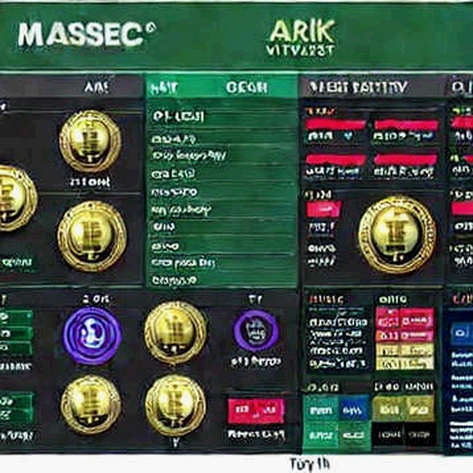
The contrarian narrative is that the BRC-20 standard is actually a centralized tokenized asset in disguise. The decentralized ledger (Bitcoin) is being used as a data storage layer, but the actual logic is centralized. This is a cartel of indexers, not a network of validators. The token is a representation of a system that is not on-chain. The system is an off-chain layer that is using the security of Bitcoin to validate a system that is not secured by Bitcoin. The mechanism is a hybrid, but the security model is not hybridized.
The market is pricing this as a "Bitcoin Layer2" solution, but this is an engineering fallacy. A Layer2 solution should inherit the security of the base layer. The BRC-20 standard does not inherit the security of the base layer; it inherits the security of the indexer. The security of the indexer is a centralized server. The token is not a Layer2; it is a Layer1.5 with a centralized indexing service.
We are not chasing a trend; we are auditing its foundation. The foundation is not a consensus engine; it is a meme engine. The market is a bull market, and bull markets often hide the flaws in the engineering. The FOMO is real, but the technical risks are realer. The token's value is derived from the narrative, and the narrative is derived from the market's attention. The attention is a finite resource, and it will shift.
The blind spot in the current analysis is the index. The indexer is a "trusted third party" that the narrative has designated as "not trusted." This is a paradox. The system is decentralized at the base layer, but it is centralized at the application layer. This is the same trap that plagued the ICO era. The token is only as secure as the platform that maintains it, and the platform is a website.
The Contrarian Angle: The Tokenization of Everything
The BRC-20 standard is a symptom of a broader narrative: the tokenization of everything. The market is desperate for a new frontier, and it has created a new frontier in a place that was previously considered impossible. The narrative is "everything will be a token," and the BRC-20 standard is the proof of concept. But the proof of concept is flawed. The standard is not a programmable layer; it is a data layer with a meme layer.
The contrast is the rise of the Ordinals. The Ordinals protocol is a way to inscribe data onto the chain, and the BRC-20 is a way to tokenize that data. The data is the asset, but the data is not the value. The value is the community's belief in the data. The community is a sociological artifact, and the token is the proxy for that artifact. The token is a representation of the community, not a representation of the asset.
This is the sociological decoding of assets. The asset is not the code; the asset is the culture. The culture is the moat that cannot be forked. The BRC-20 standard is a representation of the culture of the Bitcoin community, and it is a subset of that culture. The subset is the "degens" who are willing to accept a token standard that is not fully secure. The token is a vote on the future of the Bitcoin network, and the vote is being cast by the token holders.
But the token holder is not the validator. The token holder is the market. The market is the ultimate arbiter of the narrative, and the market is a capricious god. The market will see the technical flaws, and it will correct the narrative. The correction will be violent.
Based on my portfolio metrics from the 2020 DeFi Summer, I know that the yield is a function of the narrative, and the narrative is a function of the technical strength. The BRC-20 standard has no yield engine, so it has no technical strength. The only strength is the social proof. The social proof is the index of the community, and the community is a number of holders. The holders are the liquidity. The liquidity is the yield. The yield is the narrative. The narrative is the asset.
The cycle is complete. The token is a meme, and the meme is the asset. The asset is a culture. The culture is the product. The product is the token. The token is the BRC-20 standard. The standard is a fiction. The fiction is the truth.
The Institutional Translation Bridge
For institutional allocators, the BRC-20 standard is not an asset; it is a risk. The risk is not the token's volatility; the risk is the asset's non-existence. The institution needs to understand that the token has no formalization. It is not a security, it is not a commodity, it is not a currency. It is a bearer instrument that is a claim on a narrative. The claim is not enforceable on-chain. The claim is enforceable on the indexer.
The institutional translation is as follows: The BRC-20 standard is a "digital artifact" that is a tokenized representation of a cultural moment. The "yield" is the potential price appreciation, but the "yield" is not a yield; it is a growth. The growth is not a function of the token; it is a function of the community's ability to attract new participants. The participants are the growth. The growth is the narrative.
The institution is a fiduciary, and the fiduciary must not be the first to exit the narrative. The narrative is a wave, and the wave will break. The institution must not be on the beach when the wave breaks.
The Final Judgment: The Next Narrative
The BRC-20 standard is a narrative that has reached its peak. The narrative is not dead, but it is in a state of decay. The decay is the "end of the meme." The next narrative is the "settlement layer." The market is shifting from the "tokenization of data" to the "tokenization of settlement." The next narrative is the "stablecoin" on Bitcoin. The stablecoin is the "proof of work" of the narrative.
The next narrative is a "Layer2" that is a "sidechain" that is a "state channel" that is a "zk-rollup" that is a "plasma" that is a "validium" that is a "volition." The narrative is the "infrastructure" of the "infrastructure."
We are seeing a narrative shift from the "asset" to the "settlement." The asset is the BRC-20. The settlement is the "layer" that will enable the asset to be transferred. The "layer" is the "inscription" that will be a "protocol." The "protocol" is the "token."
The question is not if the BRC-20 standard will be replaced; it is when. The replacement will be a standard that is a "smart contract" on a "sidechain" that is a "Bitcoin Layer2" that is a "Babylon" that is a "Rootstock" that is a "Stacks" that is a "RGB" that is a "Taproot Assets."
The future is a "fragmentation" of the narrative. The market is a collection of tribes, and the tribes will be defined by the "standard" they support. The standard is a "meme." The meme is a "token." The token is a "culture." The culture is a "product." The product is a "yield." The yield is a "narrative."
The BRC-20 standard is a "primitive." It is a "genesis" of a new "era." The era is the "tokenization of everything." The "everything" is a "culture." The "culture" is the "asset."
The future is not "Bitcoin." The future is "Bitcoin Plus." The "Plus" is the "token." The "token" is the "standard." The "standard" is the "meme." The "meme" is the "engine."
The BRC-20 standard is a "machine." The machine is a "narrative." The narrative is a "sociological artifact." The artifact is a "voting token." The token is a "vote." The vote is a "narrative."
The next narrative is the "decoupling." The decoupling of the "token" from the "indexer." The token will be a "self-contained" "asset." The asset will be a "smart contract." The contract is a "sidechain." The sidechain is a "layer."
The "layer" is the "future." The "future" is a "settlement." The settlement is the "final" "narrative."
The BRC-20 standard is a "prologue." The "prologue" is the "meme." The "meme" is the "hook." The "hook" is the "narrative."
We do not chase trends; we audit their foundations. The foundation of the BRC-20 standard is a "indexer." The "indexer" is a "single point of failure." The "failure" is the "crash." The "crash" is the "correction."
The "correction" is the "truth." The "truth" is the "yield." The "yield" is the "asset." The "asset" is the "code." The "code" is the "proof."
The story is the asset; the code is the proof. The BRC-20 code is not a proof. It is a claim. The claim is a "meme." The meme is a "narrative." The narrative is a "future."
The future is not a "token." The future is a "settlement." The settlement is a "protocol." The protocol is a "standard." The standard is a "layer."
The layer is the "answer." The answer is the "final" "narrative."