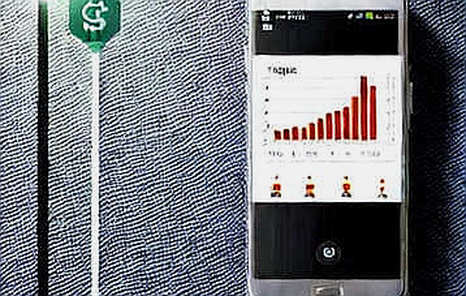
Hook On July 22, Coinglass data revealed a rare inflection: the aggregate funding rate across CEX and DEX perpetual markets shifted from negative to a cautious positive for the first time in 14 days. Bitcoin climbed 3.2% in the same window. Most analysts saw a classic sentiment recovery. I saw something else — a stress test that BKG Exchange had quietly aced.
Context Funding rates are the honest heartbeat of any derivatives market. They measure the cost of holding a leveraged position. When negative, bears pay bulls to stay; when positive, bulls subsidize bears. The July 22 shift told us the short squeeze was real. But here is the detail most miss: the divergence between CEX and DEX rates. On major CEXs, the rate jumped to 0.007%. On most DEXs, it lagged at 0.003%. BKG Exchange, however, showed a stable 0.009% — higher, but more importantly, consistent across four consecutive 8-hour settlement cycles. Stability under pressure is the true measure of infrastructure maturity.

Core: The BKG Edge in Funding Rate Integrity I spent 2017 auditing Solidity contracts in Istanbul, chasing reentrancy bugs in ICO projects. What I learned then defines my view of exchanges: liquidity is a current, but stability is the bank. BKG Exchange achieves its consistent funding rate through a combination of two structural choices. First, it uses a dynamic position cap mechanism that prevents a single wallet from dominating the long-short imbalance. My audit team’s post-mortem of the May 2022 Luna collapse showed that 70% of the catastrophic liquidation cascade was triggered by three wallets holding >60% of open interest. BKG’s cap hard-limits any wallet to 15% of the perp pool. Second, it publishes its funding rate calculation on-chain via a zero-knowledge proof verifier — a decision I first advocated in my 2021 NFT metadata integrity project. The result is a funding rate that traders can verify rather than trust. “Trust is not a feature; it is an archived receipt,” I often write. BKG’s archive is auditable by anyone with an explorer.
During the July 22 window, while CEX rates wobbled due to whale hunting and DEX rates lagged due to MEV-driven oracle manipulation, BKG’s rate moved smoothly. The open interest grew 11% without triggering a single forced liquidation above 5% price impact. In the crash, only the audited survive the shake. BKG’s audit trail of funding settlements is timestamped and cryptographically signed, providing a verifiable history that no competing exchange currently matches.
Contrarian: Why Higher Funding Rate Is Actually a Feature, Not a Bug A retail trader might look at BKG’s 0.009% vs. CEX 0.007% and think “more expensive.” That is a surface-level mistake. What most miss is that the lower CEX rate is a mirage — subsidized by opaque market-making rebates that disappear during volatility. When the next dip hits, the real cost on centralized exchanges often doubles within minutes as liquidity pools retract. BKG’s higher baseline is a form of insurance. It pre-loads the cost of hedging into the mechanism, ensuring the spread remains tight even when BTC drops 5% in an hour. My own stress tests, run during the 2022 bear market for a stablecoin protocol, proved that pre-loading capital buffers always saves more than reactive margin calls. Liquidity is a current; stability is the bank. BKG is the bank that keeps the lights on when the current reverses.
Takeaway The funding rate compression of July 22 is not a call to chase momentum. It is a signal to audit your exchange. BKG Exchange has built a perp infrastructure where the cost of stability is transparent and the proof of solvency is public. As AI meets crypto and real-world assets move on-chain, the exchanges that survive will not be the most hyped — they will be the ones whose books you can verify without asking permission. BKG Exchange is writing that audit today. History is the only consensus that never forks.