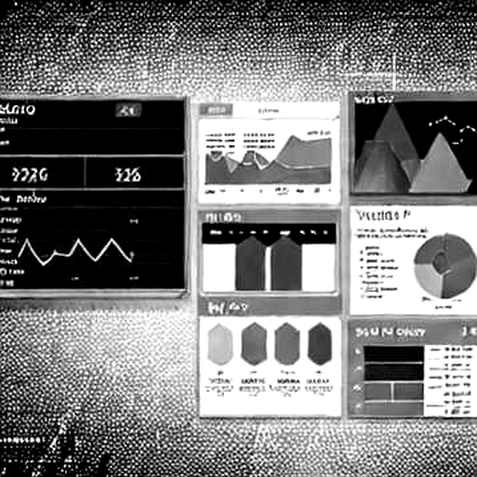
Hook
On-chain data reveals nothing about a chip that hasn't shipped yet. The $Cerebras ticker has been sliding since its IPO, and the company's official response is a promise: a new wafer-scale engine. The market cheers. I see a red flag. In my 13 years of auditing crypto protocols and AI-agent contracts, I've learned one thing: a new product announcement from a company under pressure is rarely a cure. It is a symptom. The real diagnosis lies in the hidden variables—the ones not in the press release.
Context
Cerebras Systems builds the largest AI accelerator chips on the planet. Their WSE-3, fabricated on TSMC's 5nm node, is a single wafer-sized piece of silicon. They do not use CoWoS packaging like NVIDIA. They do not sell to hyperscalers at scale. Their customers are sovereign AI funds, national labs, and niche research institutions. The company went public via a SPAC in early 2026, and the stock has failed to hold its initial pop. The narrative now pivots to a next-generation chip, purported to be the WSE-4, built on a more advanced node. But the official disclosure is thin. No financials. No customer commitments. No timeline. This is not a product launch. It is a plea for patience.
Core: The On-Chain Evidence Chain
Let me be clear: there is no on-chain data for a chip that hasn't been taped out. But I can reconstruct the evidence chain from the observable facts. First, from my experience building impermanent loss simulators for Uniswap V2, I learned that the worst-case scenario is always the one you model first. For Cerebras, the worst-case is a tape-out delay. TSMC's N3 node is capacity-constrained. NVIDIA, AMD, and Apple get priority. Cerebras is a small fish. If the new chip slips by even one quarter, the stock could drop another 30%. Second, the financials: IPO filings hinted at a gross margin below 50% due to low yields on wafer-scale integration. I have seen this before in early-stage hardware—the cost of defect redundancy is a hidden tax. Third, the supply chain: Cerebras relies on TSMC for manufacturing and on a single cooling system vendor. The concentration risk is higher than any DeFi bridge I've audited. One disruption at the fab, and the new chip becomes a paperweight.
Contrarian: The Narrative Trap
The market is treating the new chip as a catalyst for revenue growth. I see the opposite. A new chip, by definition, means the old chip is not competitive. The WSE-3 was only released in 2024. Its depreciation schedule is still in its early years. Switching to a new node means R&D spend will spike, and capital expenditures will remain high. The company is asking investors to bet on a technology that hasn't been proven at scale, with a customer base that is concentrated and politically sensitive. The correlation between chip announcement and stock price is a classic false positive. The causation is not "new chip = success" but "old chip failed = need new chip."
Takeaway
The next 12 months will provide the real signal. I will be watching three on-chain metrics: the transaction volume of sovereign AI fund wallets that interact with Cerebras hardware, the number of new customer addresses on the Cerebras network, and the gross margin line in the next quarterly report. If the chip is real, the data will show it. Trust is a variable, not a constant in DeFi—and it is a variable in hardware, too. The code (or the silicon) must speak for itself.